MY Doing DH project

My project is to map 19th-c. French and British artists’ replicas, which were works of art that are versions of a first version and made by the artist of that first version. Given that the replica was usually the hub of its own cultural, economic and social changes, my mapping project will spatially explore replicas’ contributions to art production, reception, the market, and aesthetic value across time since the early 19th century. I want to map (1) geographic sites where replicas and first versions were produced, commissioned, and collected and (2) explore how changing provenance of these objects to measure changes in taste over time and the transatlantic market for replicas. I would like to determine whether exhibitions of a replica or first version inspired commissions, or if these trajectories were distinct, indicating replicas’ independence from exhibition networks, and if they helped define and shape the 19th-c. political economy of art.

Source: MY Doing DH project

Day 1: Digital Humanities for Art Historians

We just finished the first day of a two-week summer institute at the Roy Rosenzweig Center for History and New Media at George Mason University: Rebuilding the Portfolio: DH for Art Historians. My interest in using digital research tools in art history has grown significantly in the last couple of years, in large part due to the work of colleagues who have made innovative use of them, particularly Titia Hulst and Anne Helmreich. Both Titia and Anne study the history of the art market, and one of my current projects seeks to extend such approaches to the circulation of reproductions of works of art in the nineteenth century. This project draws on archival research I conducted a few years back, which brought my attention to a body of records that promises to help us better understand how art reproductions were licensed and circulated within the international market. I’m hoping not only that the institute will teach me new skills but also that it will help me figure out if this is a project worth pursuing in the coming years.

Source: Day 1: Digital Humanities for Art Historians

Day 1 / homework

.entry-header

My project for Rebuilding the portfolio is based upon my experience as a graduate student dealing with an uncommon subject for Argentine art historians: the careers of women artists in Buenos Aires between 1880 and 1920. There’s little trustworthy information on the large group of active women artists and their stories are little-known. My aim is to create a database with biographies of these remarkable women, allowing visitors to comment/correct the information available. I would like each biography to have a set of tags that connects the data and makes it easy to see unforeseen links (for example, the school they attended, the places the exhibited at, the genres they worked on).

.entry-content

.entry-meta

Doing Digital Humanities, Day One

Nicholas V. Artamanoff Sokollu Mehmed Paşa Cami  Myron Bement Smith Collection, Freer Gallery of Art and Arthur M. Sackler Gallery Archives, Smithsonian InstitutionNicholas V. ArtamanoffSokollu Mehmed Paşa CamiMyron Bement Smith Collection, Freer Gallery of Art and Arthur M. Sackler Gallery Archives, Smithsonian Institution

The story of the discovery and identification of Nicholas V. Artamanoff’s photographs of Istanbul is an impressive tale of archival research and detective work (check back for the story in an upcoming post). This collection of images, about 1000 in number, is spread among a number of repositories in Washington, New York and Istanbul, and despite the great detective work carried out so far, there is a great deal we will never know about this collection.

Artamanoff’s photographs of the Byzantine monuments of Istanbul and archaeological sites in western Turkey are of great value to scholars of pre-Ottoman Turkey, but it is the photographs of Istanbul that are the focus of this project. Taken in the 1930s and 1940s, they show the city during a period which has been little studied, and for which there is a very scanty visual record.

Despite their potential importance, Artamanoff’s photographs of Istanbul are not without challenges as a research subject. Sites were not identified, the photographs are not specifically dated, the circumstances in which they were taken are not known, and it is extremely likely that we possess an incomplete set of Artamanoff’s work.

All of this makes these photographs a perfect case study for a digitally focused study. What might we learn about this collection by applying tools of digital analysis to the photographs? Mapping the locations of Artamanoff’s subjects on a map of Istanbul, linking the sites to contemporary images of the same places, analysing the kinds of monuments and streetscapes Artamanoff favored–all of this could give us insights into the city in which he worked.

Source: Doing Digital Humanities, Day One

My Proposed Project

I am interested in exploring some of the documentation created by my institution in its first twenty-five years or so. My museum held its first exhibition in 1919 and was officially founded in 1921. Going back to those first years, I am interested in collecting information to form data sets related to collecting (who works were purchased from, what works were purchased together, in what sequence were works purchased, how soon after creation were works purchased) as well as frequency and patterns of display (which works were hung together, how often were works on view). These sets of data, with the help of some digital tools, could reveal patterns of habit and perspectives on the collection (both individual works and how the works related to each other). It is possible that I could provide substantial examples to support long held ideas about our collection or that I could disprove theories about the same.

Source: My Proposed Project

Why Dressing Valentino?

For the next two weeks, as part of the workshop Rebuilding the Portfolio: Digital Humanities for Art Historians, I will be exploring, evaluating and maybe even beginning to utilize a variety of digital tools to think through the beginnings of a digital art history project, intended for a new course but also hopefully for sustainable research, about American films and censorship.

In a country that prides itself on its unwavering and uncompromising commitment to the idea of free speech, voluntary and involuntary forms of censorship have been allowed to thrive, and often accepted as positively beneficial, in many different guises up to the present day in American popular entertainment in all of its forms. The course will look at the history of film censorship in the United States from the perspective of how such things as the Production Code (Hays Code), wartime restrictions, anti-communist blacklisting, regional and local censorship boards (for example, Southern Baptist Ministers prior to 1968), late 1960s movements for social change, and culturally and socially-determined moral and ethical standards restricted what could be seen and could not be seen on movie screens in American theaters. We will watch and then analyze approximately 30 films from a cross-section of the 120 year history of cinema in the US, paying special attention to the films of the “pre-code” era (1930-1934, when the Hays Office had been created but its industry recommendations were not enforced), “post-code” era, post-WWII and Cold War era, and after the shutting down of the Hays Office in 1968 and concomitant institution of the MPAA Ratings Administration. Consideration will be given to issues of gender, sexuality, race, class, and political persuasion as they affect on-screen representation, and also to specific religious (Legion of Decency/Catholic boycotts) and geographically regional (Southern state censors, segregation extended to films as well as to the experience of them in theaters) censorship practices over time. Films that fall outside the “mainstream” because of their resistance to censorship will also be viewed, for example so-called Race pictures and underground cinema. The ultimate goal of the course will be to cover the wide-ranging and myriad ways in which censorship determined/determines what audiences saw/see on film and how that created a seemingly culturally-unified image of “America” that was/is, for many actual Americans, restrictive and exclusionary of their life experiences, if not outright hostile to their participation in American cultural life.

So why Valentino and dressing?

Poster - Monsieur Beaucaire (1924)_07

Valentino was the sparking idea, but also I think at this stage a good metaphor for what I hope digital humanities tools can bring to the art history practice of close reading of visual materials. I like Rudolph Valentino movies. The way in which Valentino is presented on film, how his physicality is objectified–he gets undressed and dressed frequently, and in multiple versions of visually elaborate, exotic, and highly detailed costumes–is most often paralleled in the films of the period by how female stars are visually objectified in films. Valentino is the rare male star of the silent film period to have the camera so lovingly gaze at his physical form while he is in the process of disrobing, and as such opens up space for the discussion of culturally-defined codes of masculinity  and femininity, gender, race and the body, and how Valentino disrupts that definition, as supported in the reading of fan magazines, film reviews, and opinion pieces documenting the widely differing female (swooning) and male (threatened) reception of Valentino’s screen presence.

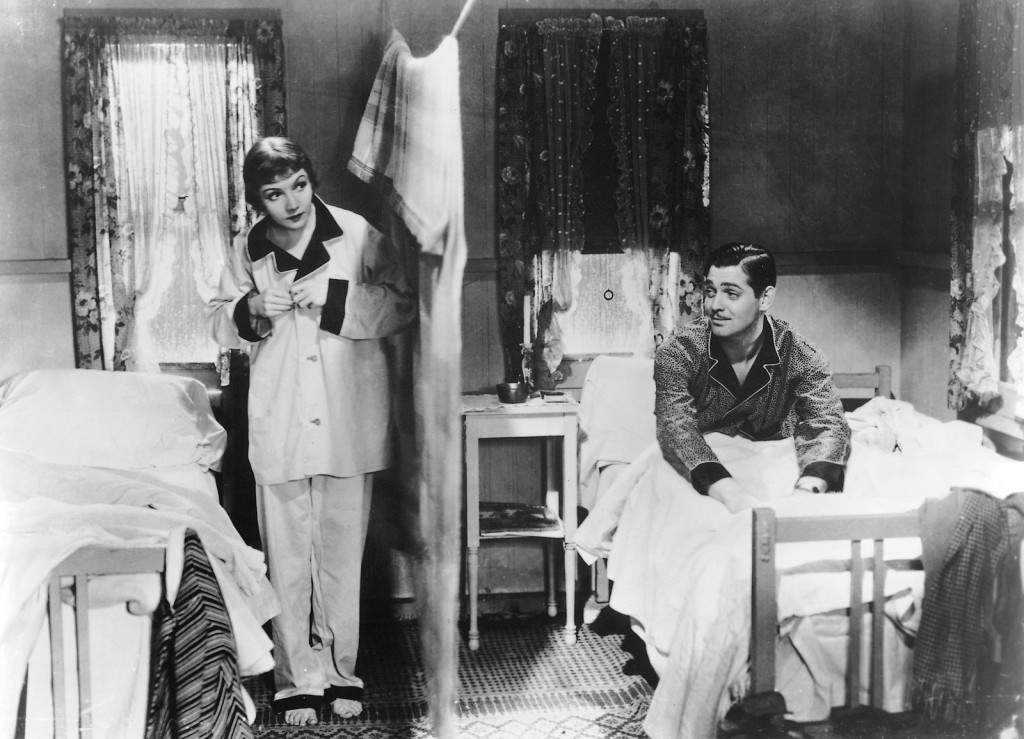
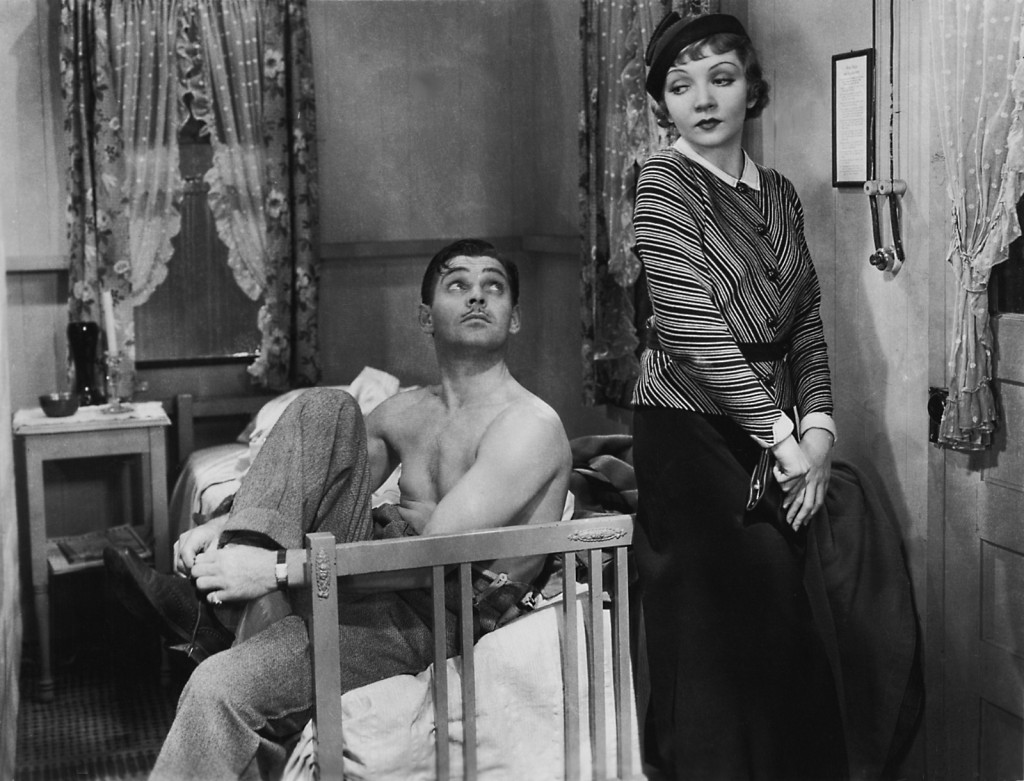
Undressing on-screen would become one of the prohibited activities vis-a-vis female bodies with the crafting of the Hays Office Production Code in the 1930s. Valentino was dead, but Clark Gable could still show his un-undershirted chest in It Happened One Night in 1934 (Claudette Colbert could only appear fully covered in his oversized men’s pajamas).
it-happened-2

c-spotlight-Happened-One-Night

But every 1930s male fan wanted to be Clark Gable, not fight him off. It is the female body which gets censored as prurient.

On the workshop schedule, we have lessons planned in collection building and data-mining, collaboration and interactivity/community, mapping and networks and visualization. Understanding how film censorship is itself visually encoded will require some aspects of all of these conceptual frameworks. So many films, so many moments to isolate and read and interpret, so many tags linguistic, cultural, historical, gendered and racial, and how to visualize for a wider audience all of the layers, intersections and nodes and subversions of cinematically represented acts of censoring. And that doesn’t even get to funding, time, and sustainability!

So I thought I would start simply, with dressing Valentino, in so much more than an exotic costume.

Follow the workshop action on twitter at #doingdah14.


Source: Why Dressing Valentino?

Homework Day_1: Write a paragraph on your new blog about your proposed project.

The project that I will be working on over the course of Rebuilding the Portfolio is Mapping Paris: Social and Artistic Networks, 1855-1889. Here is an abstract of the project:

Mapping Paris, a project in its start-up phase, charts and analyzes nineteenth-century social networks in order to map the artistic collaborations taking place in Paris between the Universal Expositions of 1855 and 1889. In these years, Paris saw the shifting role of the Salon, the exhibitions that sprung up in counter-dialogue, and the expansion of galleries. It is during this period that Paris claimed its role as the center of the Western art world, and as a result, scores of international artists descended upon to the city to live and work. Mapping Paris plots the social relationships established in Paris during this time, a cosmopolitan mélange of aesthetic exchange and artistic cooperation.

Finding its place between collaborative and crowd-sourced inquiry, Mapping Paris provides a space on the internet for refereed individuals to input data about artists’ time in Paris, whether they were Parisian pure-sang, ex-pats or visitors passing through the city. In doing so, it allows scholars to view the data in novel ways, to foster considerations of aesthetic dialogue through crossed-paths, acquaintances, friendships, conversations and collaborations in the social condenser of Paris.

The networks are mapped through primary source documents, including letters, memoirs, and exhibition records. This practice examines the nodes (i.e. the individuals) and the links between them. Mapping Paris takes into account the possibility of other connectors, alongside the more traditional hubs of nineteenth-century art historical discourse, such as the Impressionists. It provides the opportunity to engage and reconsider the concepts of center and periphery in Paris itself, renegotiating the international nature of this cosmopolitan city.

Mapping Paris evolved from my dissertation work on the social networks of Degas and contemporaneous Italian artists and their resultant artistic repercussions. During my research for the project, I realized the difficulty in keeping track of and analyzing social networks without a layered, visual means by which to examine then. Instead, I kept lists of social interactions, letters, and other primary sources of known contact between the individuals. I spent a lot of time and space establishing a credible, text-based social network, upon which I then began to investigate the resultant implications in the realm of artistic process and exchange. Upon reflection, I have realized that it will prove much more useful and efficient to visually map out these social networks, and expand them beyond the realm of just Degas and the Italians, opening up consideration of the larger artistic networks of Paris during this time period.

What Mapping Paris brings to the equation is the ability to quantitatively visualize these networks, and in doing so, ask ‘bigger’ research questions – questions that engage with the larger whole of the social network, and not just case studies of nodes. A sample, non-directional social network can be seen here, a mapping of the networks of Degas, his Italian contemporaries and their circles [click on image to enlarge]:

Sample network: Degas and the 'Italians'


Each node is connected by an edge and the references for each edge have been bibliographically cited with notation. Another direction this map could take is to add weights (i.e. multiple references). In this sample, each node is only connected via one, unweighted edge, mapped using a Yifan Hu layout. The map allows the viewer to get a sense of the social relations between groups of individuals, allowing for an understanding of those nodes that function as expected hubs (Degas) and connectors (e.g. Desboutin, De Nittis, Martelli, etc.). The source information for this map is found in the primary sources referenced in a chapter of my dissertation – and thus the map itself is admittedly biased, showing Degas as the major social condenser of the network (which was, after all, my thesis). Such an example points out the need for other data inputs, to consistently move towards more data and thus less bias within the sample.

Source: Homework Day_1: Write a paragraph on your new blog about your proposed project.

Day 1: Proposed Project

They’re more of the subtle things that belong to a novel rather than to art history.

Leo Castelli to Paul Cummings

In December 1970, art dealer Leo Castelli slyly redirected an interview with Paul Cummings for the Archives of American Art.  They were discussing Castelli’s work as a successful dealer and gallery owner.

Leo Castelli (1907-1999)  established the Leo Castelli Gallery in 1957 in New York City, recognizing that important cultural changes were occurring in America and that a new form of art would derive from Abstract Expressionism which was in its heyday. The first two artists he signed up were Jasper Johns and Robert Rauschenberg, both transitional figures in the move from Abstract Expressionism to Pop Art. Castelli became known as one of the greatest salesmen in the art market and an avid supporter of contemporary art movement. This digital project features transcripts and audio excerpts of interviews with Castelli and his contemporaries.

Source: Day 1: Proposed Project

Project Proposal for DAH: Mapping the Dynamic Landscape of Architectural Practice

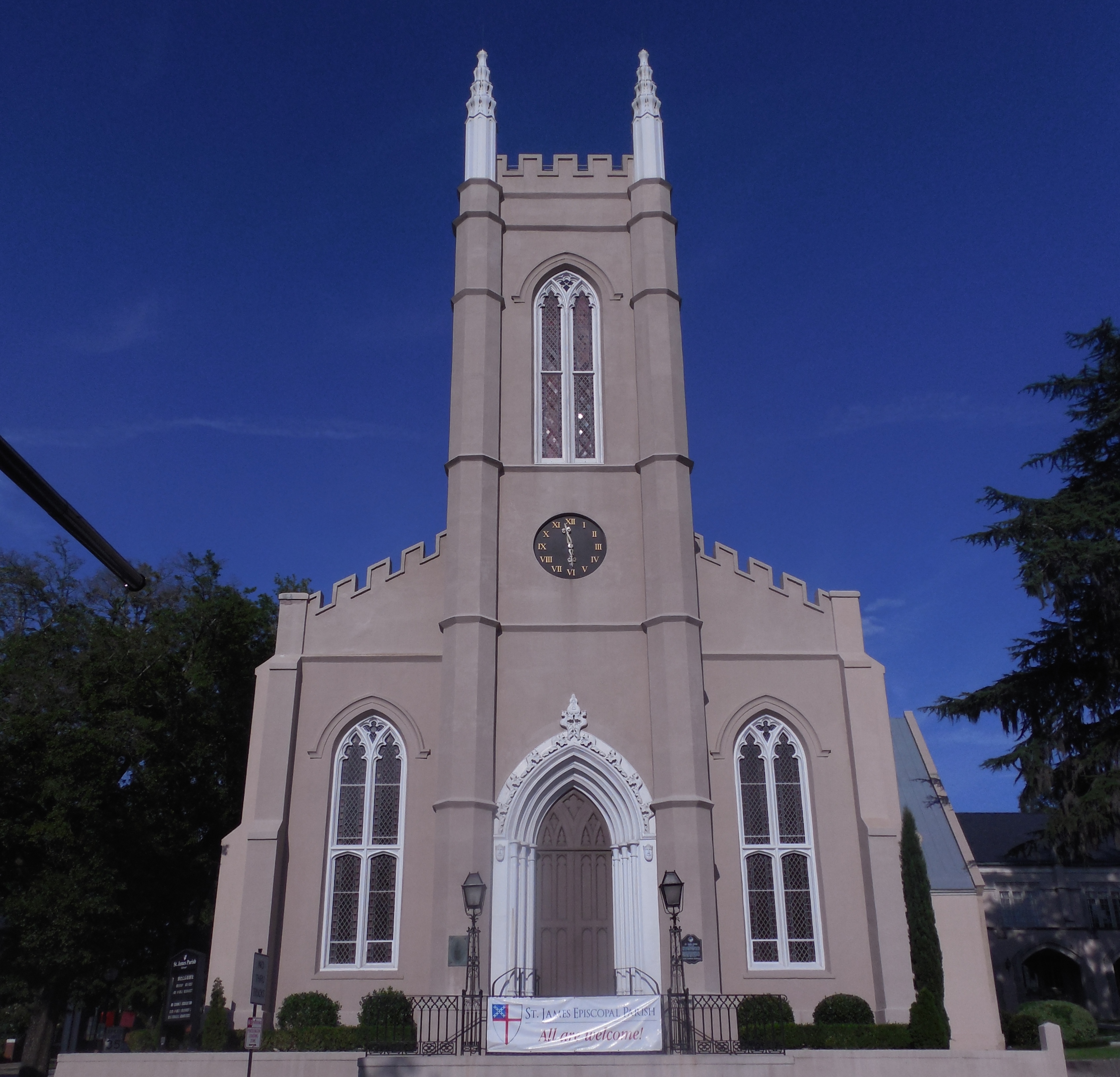
St. Jame's Church (Wilmington NC: 1839)

St. James’ Episcopal Church (Wilmington NC: 1839)

During the first half of the nineteenth century, Americans built extensive networks of transportation that scored the land with hundreds of miles of canals, roads and railroad tracks. As these physical emblems of technological development connected established cities with new towns and growing hubs of industrial development, other technological webs, including federal post roads and the services of private delivery businesses, added a second layer of communication throughout the states.

This dynamic landscape was recognized as a distinguishing characteristic of modern life by the country’s first self-proclaimed professional architects, who pursued avenues to practice that were more broad-reaching than those of any previous generation.  Much less geographically bound than their Colonial forebears, nineteenth-century architects expanded their client base, entered competitions, made use of newspapers and communicated across state lines with clients and builders they would never meet, completing buildings that they would never see. Even so, the growing rail network still imposed certain nodes of concentration and areas of disconnection that are invisible to later travelers.  The spatial reality of antebellum America influenced the early professionals and the ways they pursued jobs and practiced architecture.

This project proposes to research this dynamic landscape through the case study of Thomas U. Walter (1804-87). Walter provides a significant model as one of the country’s most active architects in this period: designer of hundreds of projects in several states (and also China and Venezuela), including prominent works in Philadelphia (Girard College) and Washington (additions to the Capitol). Walter used virtually every imaginable kind of conveyance, from horse-drawn wagons and steamboats to trains and sleighs, as well as post and parcel delivery services, in order to visit and communicate with clients and builders, oversee construction, observe quarries and foundries, and socialize with professional peers (especially as a co-founder of the American Institute of Architects); twice these travels took him overseas (Europe in 1838, Venezuela in 1841). Walter noted the details of his travel in office notebooks and journals, which not only record his movements but also his lively commentary on various means of conveyance.

This project will not only illuminate Walter’s practice but also contribute to an understanding of the problem of technological determinism in seeking the extent to which modes of conveyance (of people, materials and information) influenced the way architectural practice developed as it did—either as a determining, influencing, or coincidental relationship (or potentially all three).  Mapping technology might identify the temporal interplay between materials suppliers (quarries, foundries) and the means by which they were shipped to Philadelphia (canal, rail, road) on one well-documented project like Girard College, or the dependence on communication technologies for a small group of marble buildings that Walter designed in the early 1830s. Another option would consider the determining factors for Walter’s approach to projects that he carried out either through personal travel, complete dependence on mail, or a combination of the strategies, through decades of his career.

Source: Project Proposal for DAH: Mapping the Dynamic Landscape of Architectural Practice

Ongoing DH Project

Experimental, amusing, or beautiful, artist books are art in book form. Four years ago, we began collecting artist books for teaching and research. This non-browsing collection varies in structure, technique, and content. Our books have been used by students, faculty, and museum professionals.

Although artist books are tactile experiences, they are hidden in Special Collections for preservation and can be difficult to access through the library catalog. In order to increase accessibility, we have begun the digitization process for over 300 works. The first phase of the project will focus the 50 books by local and regional artists.

This new enhanced digital collection will include multiple images of a book. In addition, we are conducting artist interviews and creating videos to demonstrate the “reading” of an artist book which will be especially valuable for sculptural books. A unique addition is GIS mapping which is beneficial since the collection includes several items by local/regional artists. Mapping also demonstrates the relationships and collaborations between the book artists.

Behind the scenes, we are establishing metadata guidelines to improve the organization of information and accessibility. Part of this process is to create meaningful records by describing books in more detail (e.g. structure, materials). In conjunction with VRA Core, our content standards create a consistent, functional research tool. Starting with LUNA Imaging software as our digital platform, we will showcase images, audio, and video. This information will then be placed in ARTstor’s Shared Shelf to increase visibility.

BottomOfTower
FullTower
TopOfTower
BabyShoe_TitlePage
LadyHeel_colophon
apron
glove_with_text
hankerchief
pages_example1

Adapted from presentation abstract for Visual Resources and Digital Humanities (VRAlocal: Nashville 2014)

Source: Ongoing DH Project